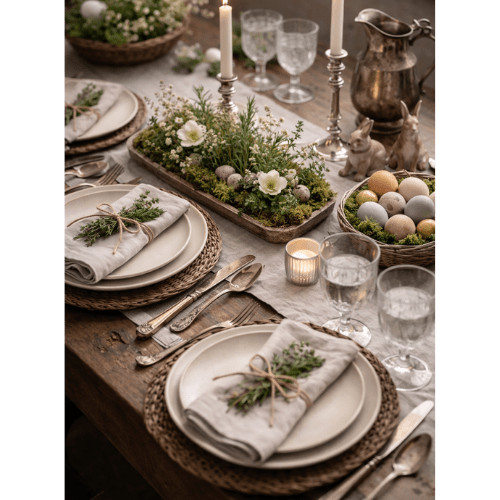
An English Garden Easter Table
A storybook-inspired spring setting gathered in mossy greens, soft linen, vintage silver, naturally dyed eggs, and the quiet charm of an English cottage table.
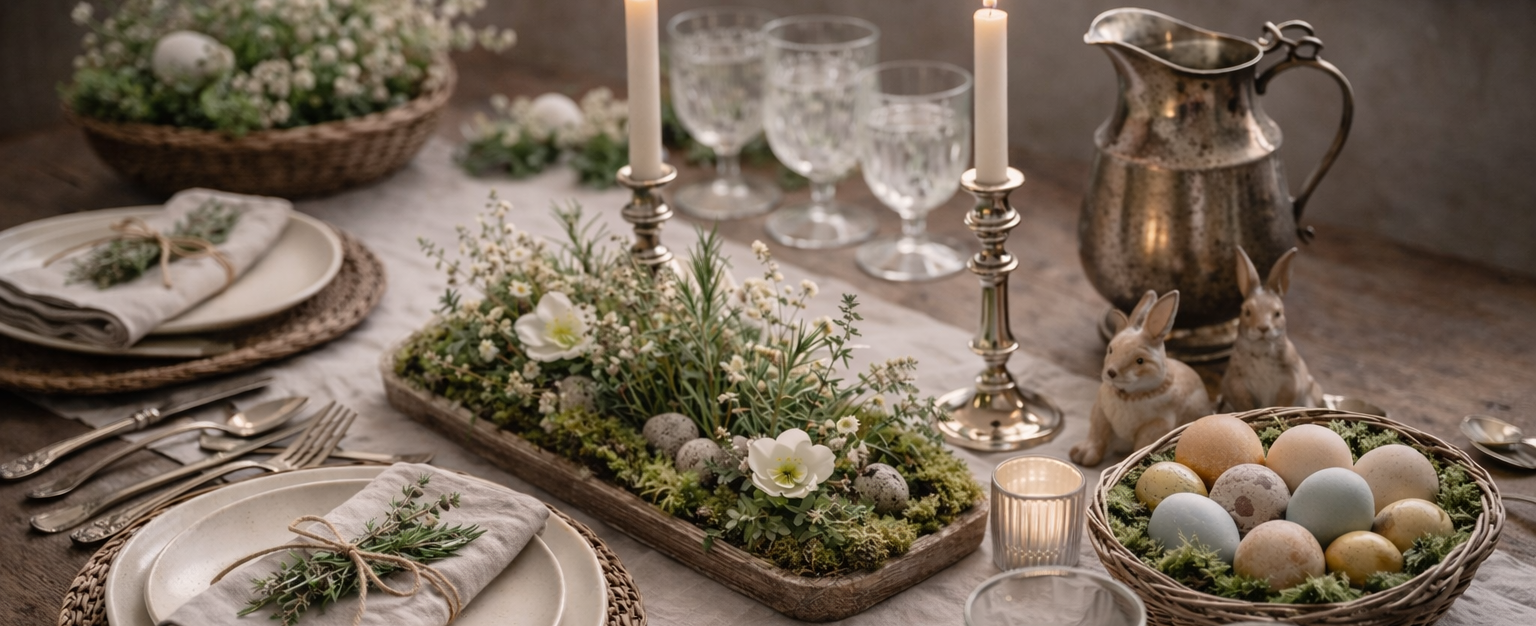
A spring table gathered in soft greens, woven textures, vintage silver, candlelight, and naturally dyed eggs.
Inspiration — A Garden Story
This table draws from the quiet charm of vintage storybooks and early spring gardens — soft greens, gathered textures, and the feeling of something gently coming to life.
Moss, herbs, natural eggs, and simple linens come together in a way that feels less styled, and more discovered.
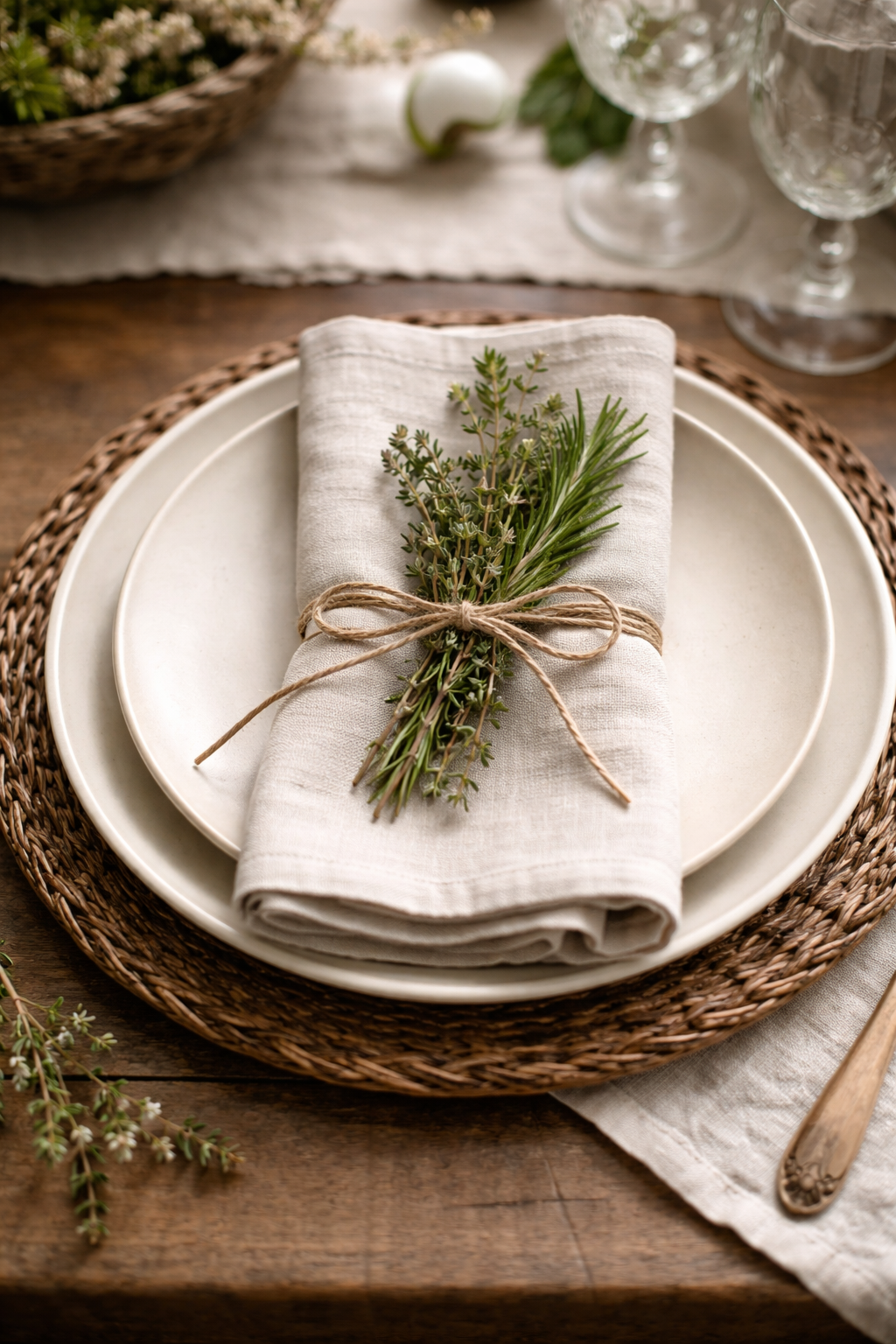
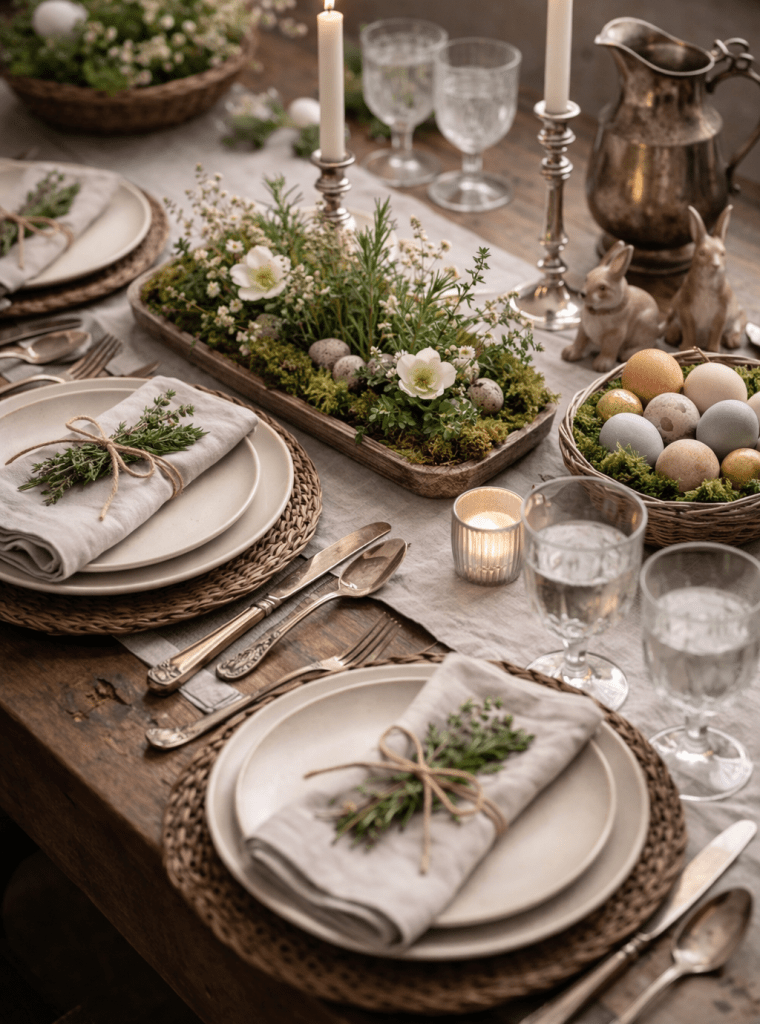
A simple layered place setting in woven rattan, cream stoneware, soft linen, and herbs tied with twine.

A low garden-bed centerpiece layered with moss, thyme, rosemary, delicate blooms, and softly gathered eggs.
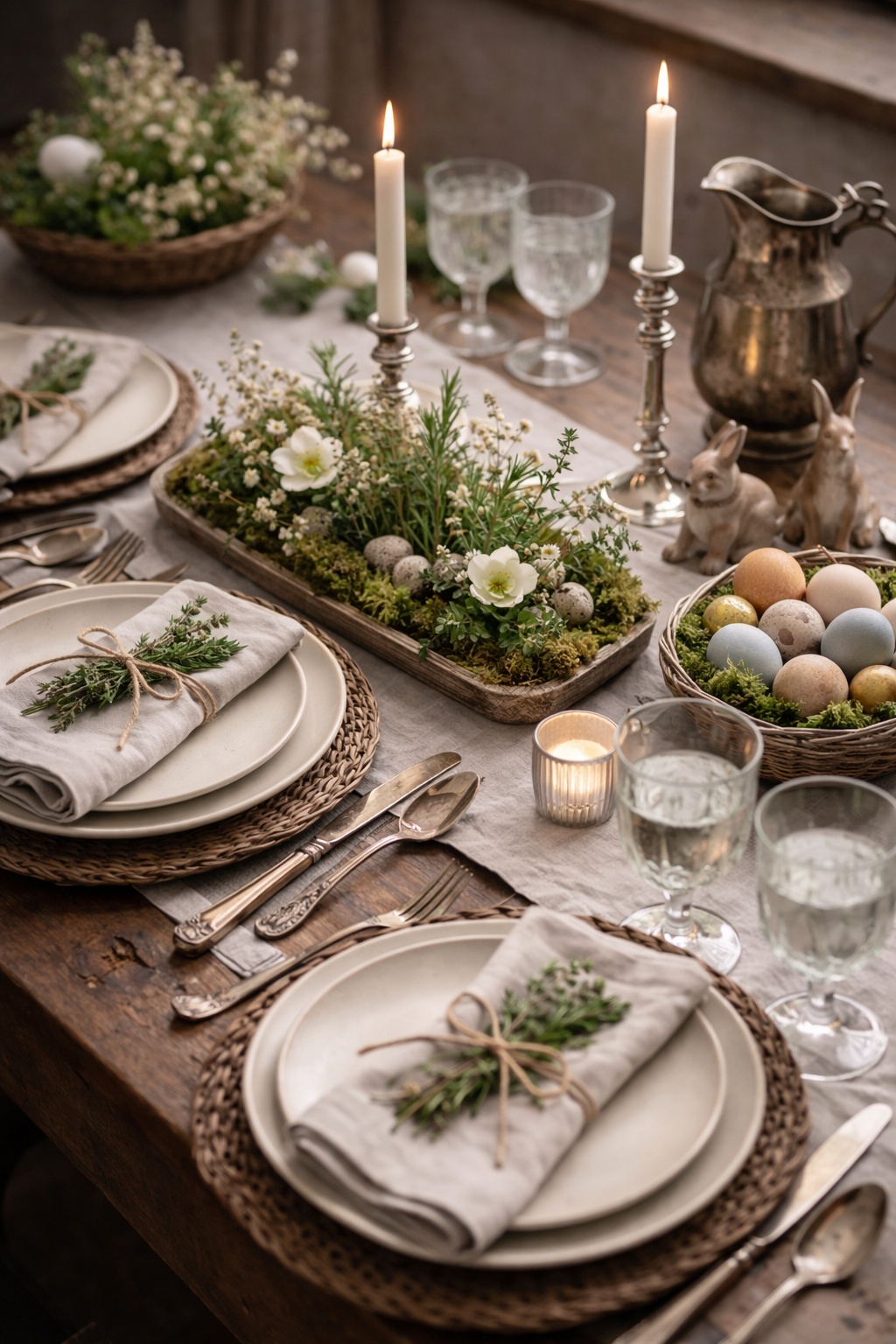
The full table gathered in soft greens, woven textures, vintage silver, candlelight, and naturally dyed Easter eggs.
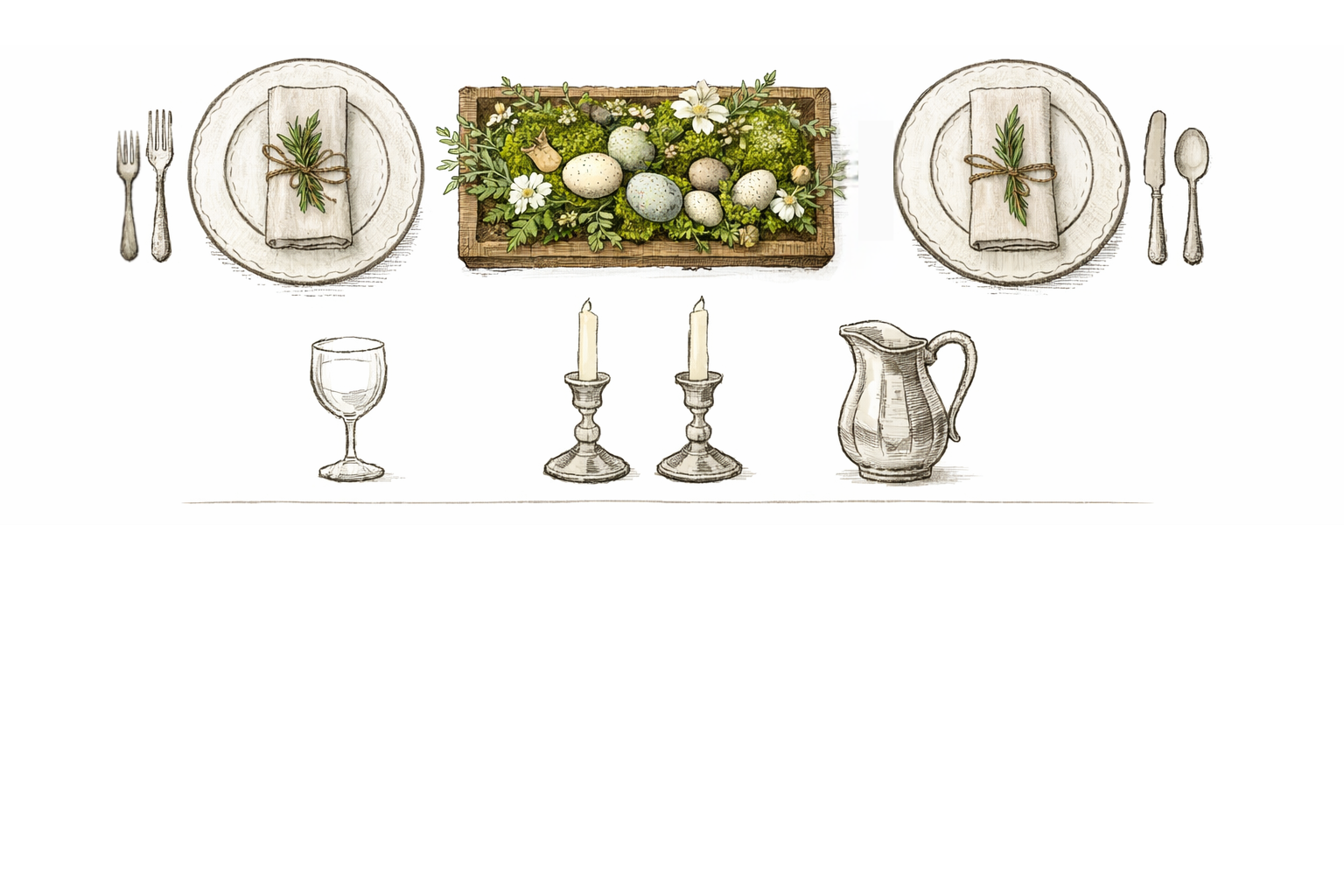
A Simple Table Diagram
A gentle visual guide for balancing the place settings, centerpiece, candles, and pitcher across the table.
How to Create This Look
The Foundation
- A linen runner or cloth in soft cream or sage
- Natural wood tones layered beneath
The Centerpiece
- A low tray filled with moss
- Tucked herbs — thyme, rosemary
- A few delicate blooms
- Natural eggs nestled throughout
The Place Setting
- Rattan or wood charger
- Cream or stoneware plate
- Linen napkin, wrapped in twine with fresh herbs
The Details
- Vintage silver flatware
- Silver candlesticks with soft taper candles
- A water pitcher for height and reflection
- Small figurines, placed gently and sparingly
Elements of the Easter Table
- Soft linen or cotton tablecloth in cream or pastel tones
- Simple dishware layered with care
- Fresh flowers or budding branches
- Glassware to catch the light
- Small seasonal touches — eggs, greenery, or natural accents
A Gentle Approach to Styling
Let the table remain light and uncluttered. Allow space between elements so each piece can be seen and appreciated. Let natural light do much of the work — reflecting off glass, softening colors, and creating a sense of ease.
Keep the arrangement low and balanced, with the centerpiece as the anchor and the silver details placed lightly around it.Choose a palette that feels like spring — not overly bright, but softened, as if touched by sunlight.
For a quieter beginning to the season, you may also enjoy →
A Spring Garden in a Dish
From the Archives — An Edwardian Easter Table
In the early years of the twentieth century, Easter arrived not with excess, but with a quiet return to light, to green, and to the gentle promise of the garden. Tables were shaped by the season itself — simple linens, fresh air through open windows, and the first signs of life gathered from the earth.
Eggs, long a symbol of renewal, were often dyed with what was close at hand — onion skins, tea leaves, herbs, and petals — their muted tones reflecting the soft palette of early spring. They were not meant to be perfect, but to feel touched by nature, each one slightly different from the next.
A closer look at natural egg dyeing traditions can be found here →
Naturally Dyed Easter Eggs
The meal itself was thoughtful and seasonal. Roasted meats, tender greens, and early vegetables marked the shift from winter to spring, but it was the table — moss-lined centerpieces, gathered herbs, and small, handmade details — that carried the deeper sense of occasion.
There was an understanding, even then, that beauty lived in the quiet things — a tied bundle of rosemary, a bowl of naturally dyed eggs, a table set not for display, but for gathering.
In many ways, these traditions were not about celebration alone, but about noticing — the light returning, the season shifting, and the simple act of bringing it gently indoors.
Notes on Sourcing
Many of these pieces can be found secondhand, in antique shops, or gently collected over time. Look for natural textures, soft finishes, and items that feel as though they’ve already lived a life.
A note from Bianca —
Some of the loveliest tables are the ones that feel as though they were gathered slowly — a basket brought out from the cupboard, herbs clipped from the kitchen, silver polished just enough to catch the light.
I’ve always loved the details that make a table feel personal: a tied napkin, something growing, a little age on the silver, and the sense that every place has been set with quiet care.
In the end, what matters most is not perfection. This is not a recipe, but a setting — a table shaped by light, color, and the quiet details that gather people together. In this vintage Easter arrangement, the table becomes part of the celebration itself, where soft pastels, simple florals, and thoughtful touches create a sense of welcome before a single dish is served.
This season unfolds in small ways — in eggs, in gardens, and at the table.
Discover more from Life In Bianca's Kitchen....
Subscribe to get the latest posts sent to your email.

 The Kitchen Garden
 Kitchen Keepsakes
 La Vie en Thé
 Life In Bianca's Kitchen....
Leave a comment